Why Venus?
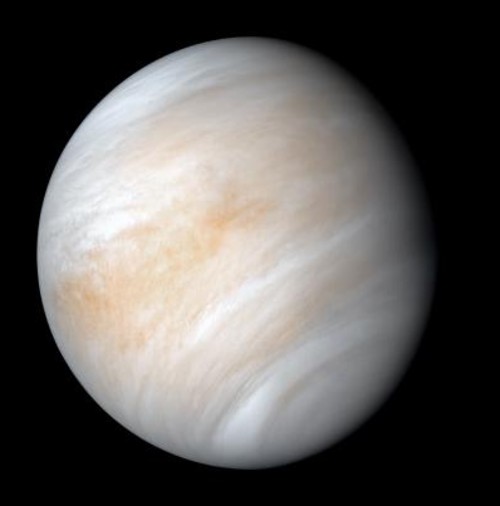
Venus is the second planet from the Sun, and the sixth largest planet. It’s the hottest planet in our solar system.
- Venus’ thick atmosphere traps heat creating a runaway greenhouse effect – making it the hottest planet in our solar system with surface temperatures hot enough to melt lead.
- Venus is permanently shrouded in thick, toxic clouds of sulfuric acid that start at an altitude of 28 to 43 miles (45 to 70 kilometers). The clouds smell like rotten eggs!
- Venus rotates backward on its axis compared to most planets in our solar system. This means the Sun rises in the west and sets in the east, opposite of what we see on Earth.
- Venus rotates very slowly on its axis – one day on Venus lasts 243 Earth days. The planet orbits the Sun faster than Earth, however, so one year on Venus takes only about 225 Earth days, making a Venusian day longer than its year!
- Venus is an unlikely place for life as we know it, but some scientists theorize microbes might exist high in the clouds where it’s cooler and the pressure is similar to Earth’s surface. Phosphine, a possible indicator of microbial life, has been observed in the clouds.