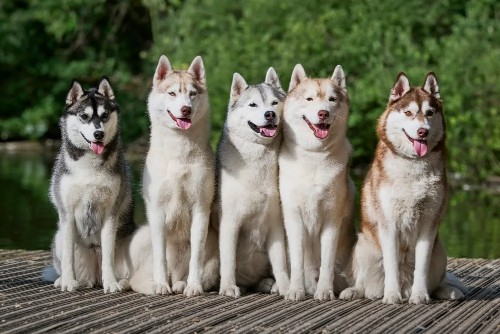
Alaskan Huskies are naturally pack animals, so they can do well in a family setting. Though Huskies can be great with kids, some people recommend that they be in a household with older children. Huskies are powerful, rambunctious dogs that can also have a tendency to jump.
The Alaskan malamute is an affectionate, loyal, playful, and confident dog. They are easily recognizable by their well-furred bodies and the cap over their heads. Alaskan malamutes were originally bred as arctic sled dogs. They come from Siberia and were brought to the United States through the Bering Strait.
Alaskan Klee Kai can become very attached to their dog owners, which is great if you’re looking for a companion dog to share your adventures in life. You can expect to have a little shadow following you everywhere you go. While they might love the company of their dog owner, Alaskan Klee Kai won’t necessarily relish the chance to interact with new people. They can be quite aloof and shy around strangers.
Neither shy nor aggressive, Eskies are always alert and friendly, though a bit conservative when making new friends. The American Eskimo Dog comes in three sizes'standard, miniature, and toy'standing as tall as 19 inches at the shoulder or as short as 9 inches. Distinctive traits include a dense, sparkling white coat with a lion-like ruff around the chest and shoulders; a smiling face, with black nose, lips, and eye-rims that convey a keen, intelligent expression; and a plumed tail carried over the back. Some Eskies have markings with the delicious color name 'biscuit cream.' They move with a bold and agile gait. Eskies are social animals and can develop problem behaviors when neglected or undertrained'they insist on being part of family life. Among the most trainable of breeds, the clever, kid-friendly Eskie practically invented the phrase 'eager to please.'
The Siberian Husky is active, independent, mischievous, and playful. It gets along fairly well with other dogs and pets and is outgoing toward strangers. Because of their friendly nature, Siberians do not make good guard dogs. The breed enjoys people of all ages but is too independent and strong to be a good walking companion for children or the elderly. It tends to be strong-willed and is not an easy dog to train. While Siberians do not tend to bark much, they are far from quiet, emitting a wide variety of “woos,” chirps, and howls.
The Samoyed is a friendly, personable dog. These are intelligent dogs, with a touch of independence. Bred to live in a tent in very close quarters with their families, they thrive on human company. Samoyeds will alarm bark and, if left alone for long periods of time, will often develop into nuisance barkers. Digging can be a problem because they dig to reach a cool resting place.
This active, tireless breed is a great choice for outdoorsy families that love adventures. These pups get along with most people but don't tend to attach themselves to any one person. Greenland dogs don't bark, but they do howl and often serenade their humans (and their neighbors). They also make a screaming sound that is typically joyful, though it may not seem that way to those unfamiliar with the breed. These pups form close bonds with other dogs in their "pack" but can be territorial around new dogs. Socializing them when they're young will curb this behavior and help them develop into well-mannered adult dogs.
The Seppala Siberian Sleddogs are superb working dogs, who have a strong pack instinct and need a strong, consistent pack leader (owner) to follow. They love to run and have a high prey drive, often taking off after small game animals. The Seppala makes an ideal running companion; they have the energy to burn and need to exercise so that they don't develop destructive behavior. Born and bred in the cold climate, they can quickly overheat at high temperatures. Therefore, they are at their best in colder climes and country settings where they can roam and indulge their active nature. If you have a Seppala in a city, be prepared to take your dog on a long walk twice a day (keep that leash on so they don't take off after small animals that they consider prey). They love games and get on well with children, so you can use playful activity to keep them mentally and physically active. This dog is one who loves company. A Seppala left to their own devices for too long will get bored and howl down the neighborhood!